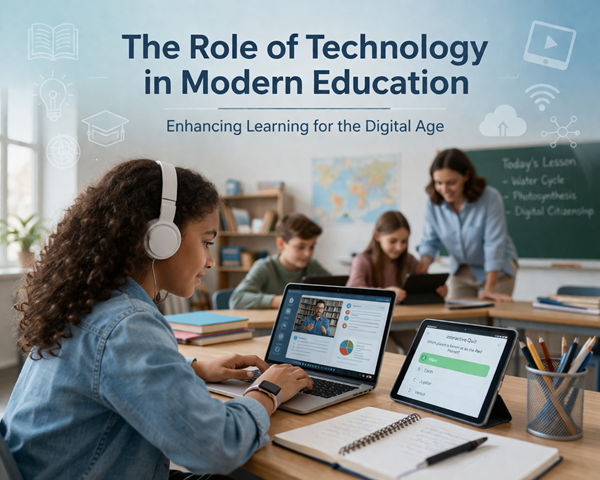
Technology has become an integral part of modern education, transforming how students learn and how teachers deliver knowledge. Over the past few decades, advancements in digital tools and internet access have reshaped traditional classrooms into dynamic, interactive environments. Today, education is no longer limited by physical boundaries, and learning opportunities are more accessible than ever before.
One of the most significant advantages of technology in education is accessibility. In the past, students were required to attend physical institutions to gain knowledge. Now, with the internet and digital devices, learners can access educational content from anywhere in the world. Online courses, virtual classrooms, and educational platforms have made it possible for individuals to learn at their own pace, regardless of their location. This has opened doors for people who may not have access to traditional schooling due to financial, geographical, or personal constraints.
Another important benefit is the enhancement of the learning experience. Technology allows educators to present information in more engaging and interactive ways. Videos, animations, simulations, and quizzes help simplify complex concepts and make learning more enjoyable. For example, instead of reading about scientific processes, students can watch visual demonstrations that improve understanding and retention.
Personalized learning is another area where technology has made a significant impact. Every student has a unique learning style and pace. Digital tools can adapt to these differences by offering customized lessons and feedback. Students can revisit difficult topics, practice exercises, and track their progress over time. This individualized approach helps improve performance and boosts confidence.
Communication has also improved through the use of technology. Students and teachers can interact more easily through email, messaging apps, and virtual meetings. This allows for better collaboration and faster feedback. Group projects, discussions, and peer learning have become more efficient, even in remote settings.
However, the integration of technology in education is not without challenges. One major issue is the digital divide. Not all students have access to reliable internet connections or modern devices. This creates inequality in learning opportunities, particularly in developing regions. Governments and organizations must work to bridge this gap to ensure that everyone benefits from technological advancements.
Another concern is the potential for distraction. While technology can enhance learning, it can also divert attention. Social media, games, and other online activities can interfere with focus if not properly managed. Students must develop discipline and time management skills to use technology effectively.
Additionally, excessive reliance on technology may reduce face-to-face interactions. Social skills and personal connections are important aspects of education that cannot be fully replaced by digital communication. Educators must find a balance between using technology and maintaining human interaction.
Despite these challenges, the benefits of technology in education far outweigh the drawbacks. It prepares students for a digital future, equips them with essential skills, and expands access to knowledge. As technology continues to evolve, its role in education will only grow stronger.
In conclusion, technology is revolutionizing education by making it more accessible, engaging, and personalized. While challenges exist, they can be addressed through proper planning and responsible use. The future of education lies in the effective integration of technology, ensuring that learning remains inclusive, innovative, and impactful.